Ashmita Chaliha Creates History, Wins First BWF World Tour Title at Korea Masters Super 300
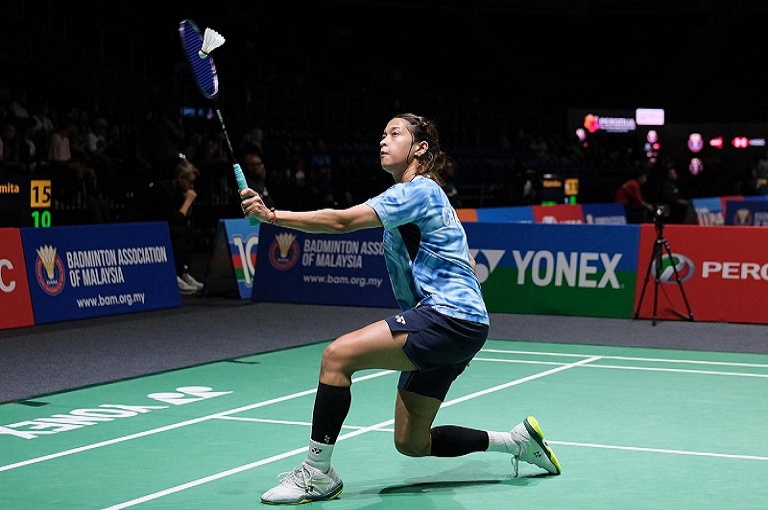
Indian Badminton Star Delivers Stunning Comeback in Korea Masters Final
Indian badminton star Ashmita Chaliha scripted a remarkable chapter in her career by winning the Korea Masters Super 300 women’s singles title on Sunday. The 26 year old Indian shuttler defeated China’s fourth seeded Han Qian Shi in a thrilling three game final to claim the biggest title of her career so far.
Ashmita overcame a slow start and bounced back brilliantly after losing the opening game. She eventually defeated Han 14 21, 21 14, 21 14 in a final that lasted 53 minutes.
The victory marked Ashmita Chaliha’s first BWF World Tour title and came as a major boost for Indian badminton. Her success also ensured that India won a second consecutive BWF World Tour women’s singles title.
Earlier, on August 2, Tanvi Sharma had won the Taipei Open, giving Indian badminton another major reason to celebrate.
Ashmita Chaliha Shows Incredible Fighting Spirit
The Korea Masters final was a test of Ashmita’s character, patience and ability to handle pressure. After losing the opening game, she made significant changes to her approach and produced a powerful comeback.
The Indian shuttler started the match with confidence and quickly established a 3 0 lead. She continued to dominate the early exchanges and moved ahead 9 5.
However, Han Qian Shi refused to surrender. The Chinese player gradually found her rhythm and began putting pressure on Ashmita during longer rallies. The momentum shifted rapidly, and the two players eventually reached 11 11.
From that point, Han took control of the game. She produced a series of accurate shots and forced Ashmita into difficult positions around the court.
Han eventually won the opening game 21 14 to take an early advantage in the final.
Despite the setback, Ashmita remained composed and came back with a completely different approach in the second game.
Ashmita Makes Powerful Comeback in Second Game
The second game witnessed a completely transformed Ashmita Chaliha.
The Indian player adopted a more aggressive strategy and began using her smashes effectively to put Han under constant pressure. Her fast defensive returns also prevented the Chinese shuttler from building comfortable attacking rallies.
The opening exchanges remained competitive, but after the score reached 6 6, Ashmita began taking control.
She increased the pace of the rallies and used accurate placement to exploit gaps in Han’s court coverage. Her confidence grew with every point, and she entered the mid game interval with an 11 8 lead.
Ashmita did not allow Han to make a comeback after the break. Instead, she continued to attack and forced the Chinese player to defend under pressure.
The Indian shuttler stretched her advantage to 17 10 and remained firmly in control.
Han struggled to reduce the deficit as Ashmita continued to find open spaces with powerful attacking shots.
Ashmita eventually closed out the second game 21 14, leveling the match and sending the contest into a decisive third game.
Decisive Third Game Becomes Turning Point
The third game was a battle of nerves, stamina and determination.
Both players began cautiously, understanding that every point could prove decisive. Ashmita made a strong start and established a 5 2 lead.
However, Han responded strongly once again. The Chinese player gradually reduced the deficit and managed to move ahead.
At the mid game interval, Han had a narrow 11 9 advantage.
For Ashmita, this was another crucial moment in the final. She had already lost the opening game and was now trailing in the deciding game.
But instead of allowing the pressure to affect her, Ashmita produced one of the most important passages of the match.
She increased her attacking intensity and began targeting the corners of the court. A superb shot close to the line helped her take a 12 11 lead.
That moment changed the momentum of the final.
Ashmita began controlling the rallies and forced Han to cover more areas of the court. Her shot selection became increasingly effective as she looked for empty spaces and avoided giving her opponent easy attacking opportunities.
The Indian player extended her lead to 19 14 and moved within touching distance of the championship.
Han then sent a return outside the court, giving Ashmita the match point.
The Indian star did not waste the opportunity.
She completed the deciding game 21 14 and celebrated a sensational victory in the Korea Masters final.
First BWF World Tour Title of Ashmita Chaliha’s Career
The Korea Masters Super 300 title represents a landmark achievement in Ashmita Chaliha’s badminton career.
Before this victory, she had already demonstrated her potential at international events. She had reached important stages of several BWF tournaments, including quarterfinal and semifinal appearances.
However, winning a BWF World Tour title had remained an important milestone.
Ashmita finally broke through in Korea.
Her ability to defeat a fourth seeded opponent in a high pressure final after losing the first game makes the victory even more impressive.
The title is expected to provide a significant boost to her confidence and could also help her improve her position in the world rankings.
Ashmita is currently ranked around the world’s top 50, and her Korea Masters triumph could help her climb further in the rankings.
Knee Injury and Long Road Back to International Badminton
Ashmita Chaliha’s title victory becomes even more inspiring when viewed against the backdrop of her injury struggles.
In 2024, she suffered a medial meniscus injury in her right knee during the Korea Open. The injury forced her to undergo surgery followed by an extended rehabilitation period.
Returning to professional badminton after a serious knee injury is never easy. A player must rebuild physical strength, match fitness and confidence while dealing with the pressure of competing at the international level.
Ashmita remained determined throughout the difficult period.
She returned to competitive action in February the following year and gradually began rebuilding her career.
Since her comeback, she has competed in 14 tournaments and steadily improved her performances.
Her results included quarterfinal appearances at the China Masters and Malaysia Masters. She later reached the semifinals of the Macau Open.
Those performances were signs that Ashmita was moving closer to a major breakthrough.
The Korea Masters title finally transformed that promise into a major international achievement.
Training Under Park Tae Sang
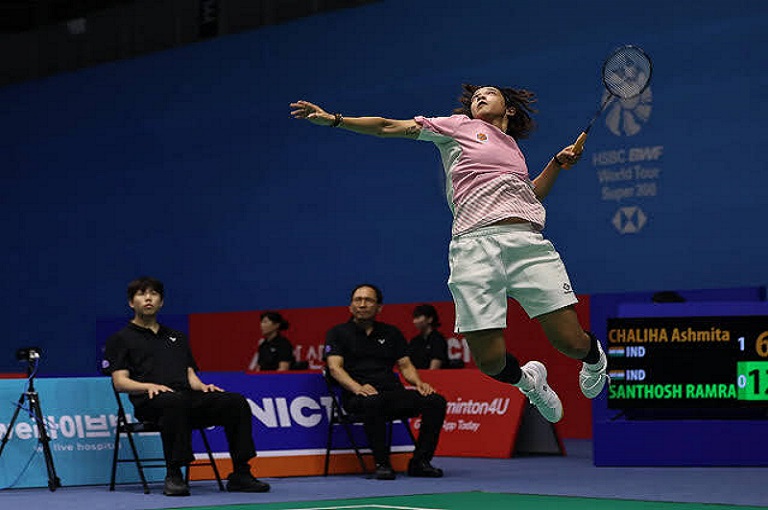
Ashmita Chaliha trains at the National Centre of Excellence in Guwahati and works under coach Park Tae Sang.
Her development under his guidance has helped her improve several aspects of her game, including attacking play, defensive recovery and tactical decision making.
The Korea Masters final showcased those improvements clearly.
Ashmita did not rely solely on powerful smashes. She also used clever placement, controlled rallies and targeted attacks to exploit Han’s weaknesses.
Her ability to change tactics after losing the first game demonstrated considerable maturity.
Rather than continuing with the same strategy, she increased her attacking pressure in the second game and maintained that intensity during the deciding game.
Her performance suggests that she is developing into a more complete and tactically aware singles player.
India Wins Second Consecutive BWF World Tour Title
Ashmita Chaliha’s triumph also adds another major achievement to India’s recent badminton success.
India has now won two consecutive BWF World Tour women’s singles titles.
Tanvi Sharma won the Taipei Open on August 2 before Ashmita followed with victory at the Korea Masters.
The back to back titles highlight the growing strength of Indian women’s singles badminton.
For years, Indian badminton was strongly associated with the success of leading men’s singles players. However, the emergence of talented women’s singles players has significantly strengthened the country’s presence on the international stage.
Ashmita’s success, alongside Tanvi Sharma’s recent breakthrough, offers renewed optimism for the future.
A Major Boost for Indian Women’s Badminton
The significance of Ashmita Chaliha’s Korea Masters victory extends far beyond a single tournament.
Her success demonstrates that Indian women’s singles players are capable of competing with and defeating highly ranked international opponents.
It also provides inspiration to a new generation of Indian badminton players.
Ashmita’s journey is particularly powerful because of the obstacles she has overcome. After suffering a knee injury, undergoing surgery and spending a long period in rehabilitation, she returned to international competition and continued working toward her goal.
The Korea Masters title is the reward for that persistence.
Her comeback also highlights the importance of patience in professional sport. Not every return from injury produces immediate success. Ashmita gradually rebuilt her fitness and confidence through regular competition before producing her breakthrough performance in Korea.
Final Score Highlights Ashmita’s Remarkable Comeback
The final score tells the story of Ashmita’s resilience.
She lost the first game 14 21 but responded with a convincing 21 14 victory in the second game.
In the deciding game, she again won 21 14 to complete the comeback.
The final score was 14 21, 21 14, 21 14 in Ashmita’s favor.
The match lasted 53 minutes and featured several momentum shifts.
The most important moment came in the third game when Ashmita recovered from a 9 11 deficit and moved ahead 12 11.
From there, she maintained her composure and gradually pulled away from Han.
Her victory was not simply a result of attacking power. It was built on patience, smart court positioning, strong defensive returns and the ability to capitalize on her opponent’s mistakes.
What This Victory Means for Ashmita’s Future
Winning the Korea Masters Super 300 could become a defining moment in Ashmita Chaliha’s career.
The title gives her valuable experience of handling pressure in a major final and defeating a seeded opponent on the biggest stage.
The challenge now will be to maintain consistency.
Ashmita will hope to carry the confidence from Korea into upcoming BWF World Tour tournaments and establish herself as a regular contender at the highest level.
Her recent performances suggest that she has the talent and determination to compete against some of the world’s best players.
If she can maintain her fitness and continue developing her attacking and tactical game, more major titles could be within reach.
Conclusion
Ashmita Chaliha has produced a stunning breakthrough by winning the Korea Masters Super 300 women’s singles title and securing the first BWF World Tour title of her career.
The 26 year old Indian defeated China’s fourth seeded Han Qian Shi 14 21, 21 14, 21 14 in a dramatic 53 minute final.
Her victory was especially impressive because she had to overcome an early setback after losing the opening game. She responded with aggressive badminton in the second game and showed extraordinary composure in the deciding game.
The title also completes an inspiring comeback story after Ashmita suffered a medial meniscus injury in her right knee during the 2024 Korea Open and underwent surgery and rehabilitation.
Since returning to competitive badminton, she has steadily rebuilt her form, reaching the quarterfinals of the China Masters and Malaysia Masters and the semifinals of the Macau Open before finally claiming her maiden BWF World Tour crown.
Her triumph, following Tanvi Sharma’s Taipei Open victory on August 2, gives Indian badminton two consecutive BWF World Tour women’s singles titles.
For Ashmita Chaliha, however, this is more than just another trophy.
It is the result of resilience, determination and an extraordinary comeback.
The Korea Masters title could prove to be the launchpad for an even bigger chapter in her international badminton career.
About The Author