ED Raids Al-Falah University as Disturbing Links Emerge in Delhi Car Blast Case
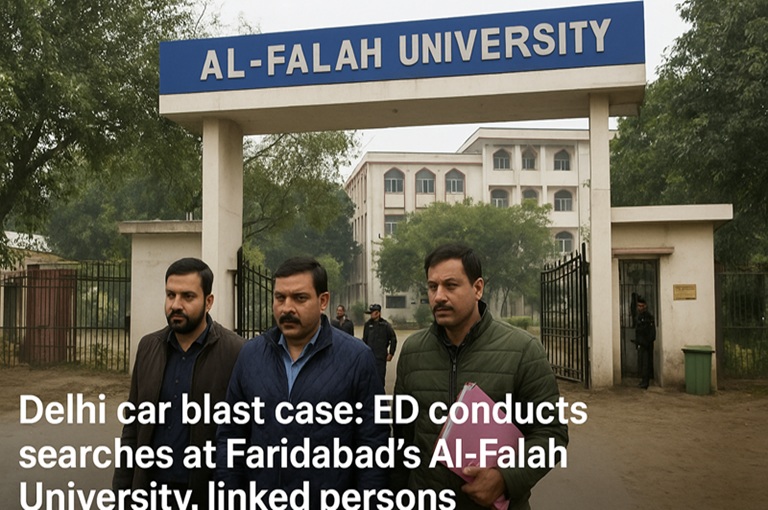
The investigation into the recent car blast near Delhi’s Red Fort has intensified, with the Enforcement Directorate (ED) expanding its probe into financial links and potential terror funding channels. On Thursday, the agency carried out a series of coordinated searches at Al-Falah University in Faridabad and premises associated with individuals connected to the case. These raids form part of a wider crackdown aimed at uncovering the financial and operational network behind the blast, believed to be part of a larger “white-collar” terror module. The ED Raids Al-Falah University highlight the agency’s commitment to tackling these serious threats.
The recent ED Raids Al-Falah University have drawn significant media attention, highlighting the implications of financial mismanagement within educational institutions.
A Financial Trail Under Suspicion
According to officials, the ED’s searches targeted a network of individuals and entities allegedly connected to suspicious money transfers, shell companies, and irregular financial practices. The agency suspects that some of these networks may have been used to support individuals involved in radical activities or for channeling funds linked to extremist motives.
The blast near Red Fort raised immediate red flags when investigators found details hinting at long-term planning and possible involvement of highly educated individuals. This discovery shifted the probe beyond the immediate physical evidence at the blast site and toward a deeper financial inspection. The ED believes the money trail could reveal critical information about the source of funding, planning mechanisms, and the role of any institutional support.
Spotlight on Al-Falah University
ED Raids Al-Falah University: A Closer Look
In light of the ED Raids Al-Falah University, many are questioning the internal monitoring practices at the institution.
As the investigation unfolds, the ED Raids Al-Falah University will likely prompt a reevaluation of compliance protocols within higher education.
These developments have led to increased scrutiny following the ED Raids Al-Falah University, with legal experts weighing in on potential ramifications.
Al-Falah University, located in the Dhauj region of Faridabad, has become a focal point in the investigation after the names of several individuals associated with the institution surfaced during earlier interrogations. The university campus and properties linked to some of its employees were among the locations searched by the ED.
Furthermore, the ED Raids Al-Falah University may lead to stricter regulations governing educational funding.
The implications of the ED Raids Al-Falah University could resonate across the education sector for years to come.
Legal experts suggest that the ED Raids Al-Falah University could set a precedent for future investigations of this nature.
The outcomes of the ED Raids Al-Falah University remain to be seen, but they have undoubtedly sparked a nationwide conversation about transparency.
Officials stated that the action was carried out based on credible inputs that suggested the presence of documents, digital records, or financial data that could help trace unexplained transactions. Investigators are also examining whether certain facilities, such as university accommodations and rented rooms, were used for meetings, storage, or planning related to the blast.
While the university administration has not been formally accused of wrongdoing, the involvement of individuals associated with the institution has prompted agencies to carefully scrutinize all possible links. Authorities are reviewing staff movements, visitor records, CCTV footage, and academic or administrative documents that may shed light on the suspects’ activities.
Individuals Under Lens
As more information emerges from the ED Raids Al-Falah University, stakeholders will be keenly watching for updates.
Several individuals believed to be connected to the university have come under the scanner for their alleged links to the blast accused. Early findings indicate that some of the suspects had rented rooms or accommodation near the university, which were later searched by security agencies. These searches reportedly led to the recovery of documents, notes, and digital devices that suggested long-term planning and potential contacts with external operatives.
Investigators are exploring whether any of the individuals were part of a radicalised circle, operated covert communication channels, or maintained links with extremist groups outside the NCR region. The ED’s financial probe is expected to complement earlier findings by the state police and central agencies, offering a clearer picture of how the suspects managed funds and logistics.
The fallout from the ED Raids Al-Falah University is likely to prompt a review of funding sources in similar institutions.
Monitoring practices are expected to change in the wake of the ED Raids Al-Falah University, compelling institutions to adopt stricter measures.
Possible Terror-Funding Angle
One of the key questions in the probe revolves around the source of money used for procuring materials associated with the blast. Preliminary analysis indicates that the operation may have required not just technical knowledge, but also financial backing. Agencies are now looking into whether funds were sourced through legitimate earnings, diverted from institutional accounts, or generated from illegal activities such as fraud or shell-company operations.
The ED’s involvement signals that investigators believe the blast may not have been an isolated act but part of a more organised attempt involving financial planning. If confirmed, this would shift the narrative from a localised incident to a more sophisticated structure resembling a “white-collar” terror module.
Government Steps In
The developments have prompted concern within government circles, with the Union Home Ministry reportedly monitoring the progress of the investigation closely. Senior officials have emphasised the need for coordination between central agencies, especially given the possibility of interstate or cross-border linkages.
A forensic audit of financial records connected to the suspects and relevant institutions is also under consideration. Such an audit would help verify whether any funds were misappropriated or whether unexplained financial patterns align with the suspects’ activities.
Impact on Students and the Academic Community
The raids at Al-Falah University have created an atmosphere of uncertainty among students and faculty members. While authorities have assured that academic activities will continue as usual, the presence of law enforcement officials on campus has raised questions regarding security, institutional oversight, and the responsibilities of educational institutions in monitoring staff and student activities.
University officials have stated that they are cooperating fully with the ED and other agencies, providing documents and access wherever required. They insist that the institution stands firmly against any illegal activity and that the actions of a few individuals, if proven, should not reflect on the broader academic community.
What Lies Ahead
The ED’s findings from the searches are expected to play a crucial role in shaping the direction of the case over the coming days. Any recovery of financial documents or digital evidence could uncover hidden links, expose funding channels, and help identify additional suspects who may have supported the operation indirectly.
As the investigation progresses, more details are likely to emerge regarding the structure of the suspected terror network, the level of planning involved, and the extent of the financial ecosystem supporting it.
For now, the searches at Al-Falah University mark a significant step forward in unraveling the complexities behind the Delhi car blast case, indicating that authorities are pursuing every angle to ensure a comprehensive and transparent probe.
About The Author