40 year old planes are flying, but fuel ban on 10 year old cars?’ – Former Air Marshal Sanjeev Kapoor raised questions on the policy of Delhi government.
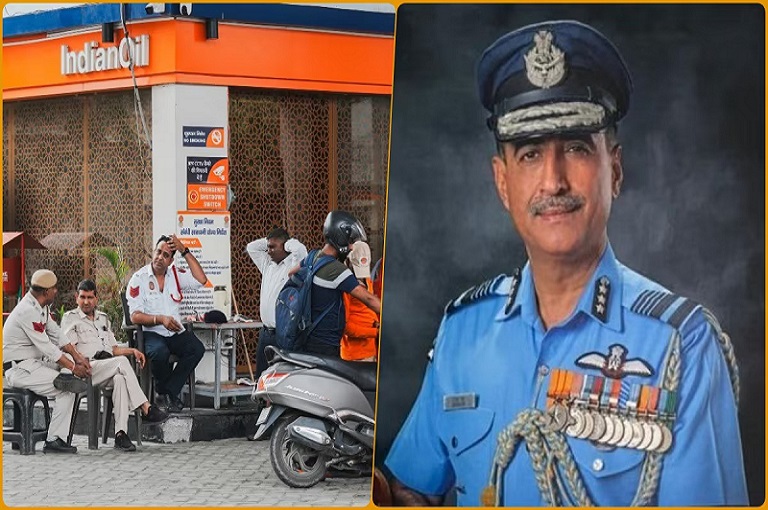
Fuel Ban on Old Vehicles in Delhi: Former Air Marshal Sanjeev Kapoor’s Sharp Reaction
The Delhi government has implemented a new and strict policy from July 1, 2025, under which diesel vehicles older than 10 years and petrol vehicles older than 15 years will not be allowed to refuel at any petrol station in the state. This step has been taken to curb the increasing air pollution in the capital. However, the policy has also drawn criticism, particularly from former Indian Air Force officer and pilot Sanjeev Kapoor, who has strongly opposed this rule.
What is this New Policy?
According to the Delhi government’s “No Fuel for Old Vehicles” policy:
- Diesel vehicles older than 10 years and petrol vehicles older than 15 years will not be provided fuel at petrol pumps.
- ANPR (Automatic Number Plate Recognition) cameras are being used to identify such vehicles.
- Vehicles violating this rule may be fined between ₹5,000 and ₹10,000 and can also be impounded for scrapping.
- The rule does not apply to CNG vehicles.
The government argues that old vehicles contribute significantly to Delhi’s air pollution. This step has been taken in compliance with directives from the National Green Tribunal (NGT) and the Supreme Court.
Former Pilot Sanjeev Kapoor’s Opposition
Former Air Force officer Sanjeev Kapoor expressed his views on social media platform ‘X’, writing, “We are still flying 40-year-old fighter jets, but a 10-year-old car in Delhi is not allowed fuel!” His comment was a direct criticism of the government’s policy.
He argued that targeting only private vehicles is not rational, while old vehicles used in public transport and government services face no such restrictions. Kapoor also warned that this policy could lead to the rise of a “black market,” where people might resort to illegal means to obtain fuel.
Policy’s Objective vs Practical Challenges
Delhi’s air is considered among the most polluted in the world. Especially during winters, pollution levels reach hazardous levels. In this context, the Delhi government’s policy is certainly important from an environmental standpoint. But the real question is whether this policy is balanced and practical.
Many experts believe that the fuel ban will create difficulties for citizens who rely on old vehicles but cannot afford to buy new ones. This move could especially impact the lower and middle-income groups.
Technical Aspects and Implementation Challenges
While the use of ANPR cameras to identify vehicles is a technically advanced approach, questions remain about its effective implementation. Will all fuel stations be able to enforce this system efficiently? Could there be cases of misidentification?
Furthermore, the Delhi government has yet to clarify what options are available to those who wish to comply with the rules. Are there incentives for scrapping old vehicles? Is there any provision to convert old vehicles to electric ones?
Conclusion
This policy by the Delhi government is undoubtedly a step in the right direction for the environment, but its implementation and impact need thorough consideration. Reactions from experts like former Air Marshal Sanjeev Kapoor highlight the importance of balancing technical, social, and economic factors in policymaking.
About The Author