Iran Protests: Death Toll Rises to 544 Amid Intensifying Crackdown, Rights Group Says
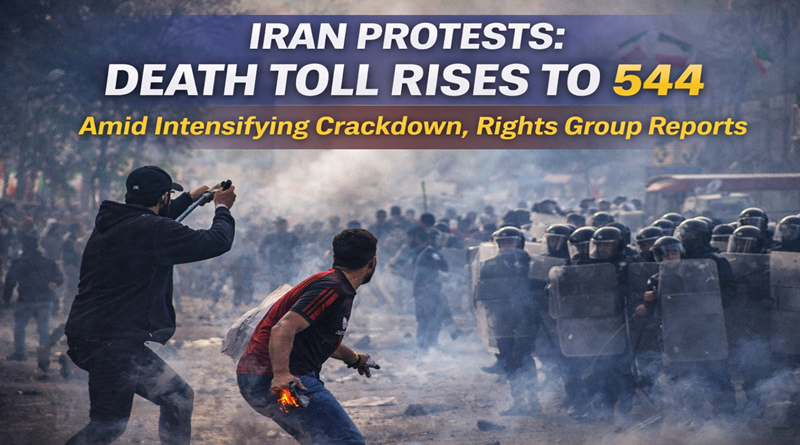
Protests across Iran have intensified in recent weeks as mounting economic pressure and political discontent continue to fuel nationwide demonstrations. According to the US-based Human Rights Activists News Agency (HRANA), at least 544 people have died during the unrest so far, marking one of the deadliest protest crackdowns the country has witnessed in years.
The demonstrations, which began as protests against worsening economic conditions, have rapidly expanded into a broader movement questioning governance, civil liberties, and accountability. Despite strict security measures and widespread communication restrictions imposed by authorities, reports of clashes between protesters and security forces continue to emerge from multiple cities.
Rising Death Toll and Arrests
HRANA, which monitors human rights conditions in Iran through a network of activists and verified sources, reported that the fatalities include protesters, bystanders, and members of security forces. The group also stated that thousands of people have been arrested, with many facing unclear charges or being held without formal legal proceedings.
Human rights organisations warn that the true death toll could be higher, as Iran has imposed internet blackouts, mobile network shutdowns, and media restrictions, making independent verification difficult. Families of victims have reportedly faced pressure not to speak publicly, further limiting transparency.
What Triggered the Protests?
The unrest was initially sparked by severe economic hardship, including sharp inflation, unemployment, and the continued devaluation of Iran’s national currency. Rising prices of essential goods have placed significant strain on households, leading to widespread frustration, particularly among young people and working-class communities.
As demonstrations spread, slogans and demands increasingly reflected broader political grievances, with protesters calling for reforms, accountability, and greater personal freedoms. The protests have been reported in major urban centres as well as smaller towns, highlighting the depth of public dissatisfaction.
Security Response and Crackdown
Iranian authorities have responded with a heavy security presence. Protesters have been dispersed using force in several areas, according to activist groups, with reports of live ammunition, tear gas, and mass detentions. Officials have described the demonstrations as acts of unrest encouraged by foreign influence, a claim repeatedly denied by protesters and rights organisations.
State media has offered limited coverage of the events, often portraying demonstrators as “rioters” or “saboteurs.” Meanwhile, the government has not released comprehensive official figures on casualties or arrests, further fueling concerns about transparency and accountability.
International Reaction and US Response
The growing death toll has drawn international attention. Several global leaders and human rights organisations have expressed concern over the situation, calling for restraint and respect for human rights. The United States has acknowledged the reports and stated that it is closely monitoring developments.
Former US President Donald Trump recently commented on the situation, claiming that Iranian authorities had signalled interest in diplomatic talks amid the unrest. While Tehran has not publicly confirmed such discussions, the remarks highlight the broader geopolitical implications of the crisis.
International rights groups have urged independent investigations into the use of force against civilians and have called on Iran to restore full internet access to allow transparency and free flow of information.
Impact on Daily Life
The ongoing protests and security measures have disrupted daily life across many parts of Iran. Schools, businesses, and public transport services have faced intermittent closures, while families remain uncertain about the safety of loved ones detained during demonstrations.
Medical professionals and emergency responders reportedly face challenges providing care due to security restrictions, and activists say hospitals are under pressure to limit information about injured protesters.
Human Rights Concerns Grow
Rights organisations stress that the situation represents a serious escalation in Iran’s handling of dissent. The reported deaths, mass arrests, and communication blackouts have raised alarms about violations of fundamental freedoms, including the right to peaceful assembly and freedom of expression.
HRANA and other monitoring groups continue to collect data despite difficult conditions, warning that the crisis may deepen if political dialogue and economic relief measures are not pursued.
What Lies Ahead?
As protests continue, Iran faces increasing internal and external pressure. Analysts say the government’s response in the coming weeks will be critical in determining whether tensions ease or further escalate. Restoring public trust, addressing economic grievances, and ensuring accountability could play a key role in shaping the outcome.
🔹 Key Highlights
- 544 deaths reported by US-based Human Rights Activists News Agency
- Protests triggered by economic crisis, later expanding into political demands
- Thousands arrested, internet restrictions continue
- Global concern grows over human rights violations
About The Author