Google Maps Gets Powerful Gemini AI Upgrade With Ask Maps and Immersive Navigation
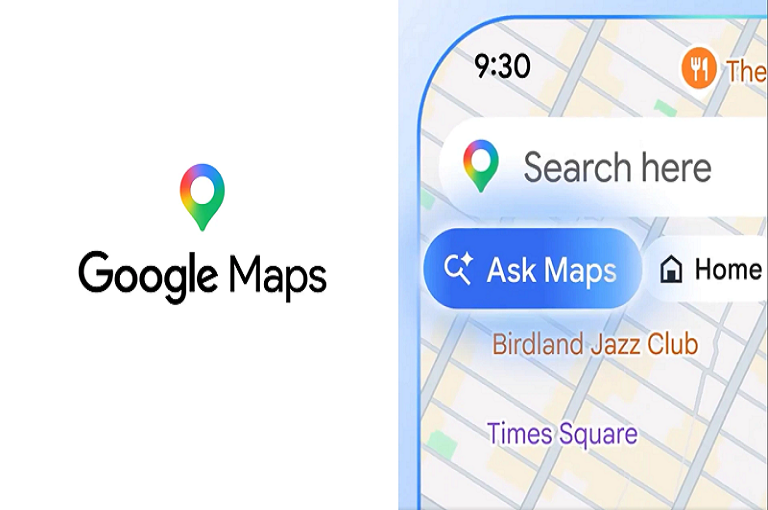
Google Maps Is Becoming a Smart AI Travel Assistant
Google has taken a major leap forward in navigation technology by introducing powerful new features for its widely used navigation platform, Google Maps. These updates are designed not only to guide users from one place to another but also to deliver a smarter, more personalized travel experience.
The company has introduced two groundbreaking features called Ask Maps and Immersive Navigation. Both features integrate the advanced capabilities of Google’s Gemini AI models with the massive Google Maps database. This allows users to ask complex real world questions directly within the app and receive intelligent responses instantly.
According to Google, this update represents the biggest improvement to Google Maps in more than a decade. It aims to transform driving, navigation, and trip planning into a more intuitive and intelligent experience.
What Is Ask Maps and How It Works
AI Powered Conversational Search Inside Google Maps
Ask Maps is a new AI powered feature that allows users to ask questions directly within the Google Maps app. Instead of typing simple searches, users can now ask questions in natural conversational language using text or voice.
The feature stands out because it does more than display traditional search results. It analyzes multiple factors such as map data, traffic conditions, user reviews, and location insights to provide highly relevant recommendations.
For example, a user could ask whether driving or taking the metro would be faster to reach a destination at a specific time. Another example could be asking where to find a good coffee stop along the route.
The AI evaluates traffic conditions, estimated travel time, distance, and nearby places before providing helpful navigation suggestions along with recommendations.
How Ask Maps Delivers Intelligent Recommendations
Powered by Massive Real Time Data and Location Insights
Google Maps already hosts one of the largest location databases in the world. According to the company, the platform contains information on more than 300 million places globally.
In addition, over 500 million contributors from around the world continuously update Google Maps with reviews, ratings, photos, and local insights.
Ask Maps uses this enormous data network to generate smart answers. When a user asks a question, the AI scans through these datasets to identify the most relevant suggestions.
For instance, if someone asks where they can enjoy vegetarian snacks while watching a live sports match nearby, the system analyzes nearby cafes and restaurants that match those criteria.
It may also provide additional insights such as popular menu items, the typical atmosphere during match days, and whether the location offers parking or valet services.
Personalized Suggestions Based on User Preferences
AI Understands Your Interests and Search History
One of the most powerful aspects of Ask Maps is its personalization capability. The feature takes into account the user’s previous searches, saved places, and activity within the app to refine suggestions.
For example, if a user frequently searches for vegetarian restaurants, the AI will prioritize vegetarian dining options when recommending places in a new city.
This personalized approach saves time and helps users discover places that align with their preferences.
Ask Maps also supports a conversational search experience. After receiving an initial answer, users can continue asking follow up questions to refine their search further.
For example, they might ask which place has easier parking or which route is more convenient to reach the destination.
Easier Trip Planning and Discovering New Places
A Powerful Tool for Exploration and Travel Planning
Ask Maps is not limited to navigation. It can also function as an intelligent trip planning assistant.
If someone is planning a night out with friends, they can ask Google Maps to suggest places where they can enjoy snacks while watching a live match.
The AI evaluates nearby venues and recommends the most suitable options.
This capability helps users explore new locations, discover hidden gems, and make better decisions when planning outings or trips.
Immersive Navigation Brings a Revolutionary Driving Experience
The Biggest Driving Upgrade to Google Maps in Over a Decade
Alongside Ask Maps, Google has also introduced Immersive Navigation, a powerful feature designed to dramatically improve the driving experience.
According to the company, this update represents the most significant upgrade to driving navigation in Google Maps in more than ten years.
The interface has been redesigned to provide clearer and more intuitive visual guidance for drivers.
Realistic 3D Views of Roads and Surroundings
A More Visual and Accurate Navigation System
One of the most exciting aspects of Immersive Navigation is its advanced 3D visualization capability.
With this feature, Google Maps can display a realistic three dimensional representation of the road and surrounding environment.
This includes buildings, terrain, overpasses, and other important landmarks along the route.
The system relies on Gemini AI models that analyze real world imagery collected from Street View and aerial photography.
This spatial understanding allows the app to create a more accurate and visually immersive navigation experience.

Clearer Driving Guidance With Important Road Details
Highlighting Lanes Traffic Lights and Crosswalks
Immersive Navigation also improves driving safety by clearly highlighting critical road information.
The system emphasizes elements such as traffic lanes, crosswalks, traffic lights, and stop signs when they become relevant during navigation.
This ensures drivers receive the right guidance at the right moment, making it easier to choose the correct lane and drive safely.
Smarter Route Comparisons and Traffic Insights
Choose Between Faster Routes or Less Traffic
Another valuable improvement is the ability to compare different routes more effectively.
Google Maps can now explain the advantages and disadvantages of each route. For example, it may suggest a faster route that includes tolls or a slightly longer route with less traffic.
The app also uses community generated reports to inform drivers about road closures, construction work, accidents, and traffic delays.
This helps users make better decisions and avoid unnecessary delays during their journey.
Advanced Route Preview for Better Driving Decisions
See Upcoming Turns and Lane Changes in Advance
Immersive Navigation also introduces a large preview of the upcoming route. This allows drivers to clearly understand upcoming turns, intersections, or lane changes before reaching them.
In addition, voice navigation instructions have been redesigned to sound more natural and conversational, making them easier to understand while driving.
Availability and Rollout of the New Features
Ask Maps Launches in India and the United States
Google has confirmed that the Ask Maps feature has started rolling out on both Android and iOS versions of Google Maps.
The rollout has begun in India and the United States. Initially, the feature is available in English, with support for more languages expected in the future.
On the other hand, Immersive Navigation has started rolling out in the United States and will gradually expand to more regions.
The feature will also be available on vehicles that support systems such as Apple CarPlay, Android Auto, and Google Built In platforms.
The Future of AI Powered Navigation
Google Maps Is Evolving Beyond Traditional Navigation
Google Maps is already considered the most widely used navigation platform in the world. However, the introduction of Ask Maps and Immersive Navigation could take it to an entirely new level.
These features transform Google Maps from a simple navigation tool into a smart AI powered travel assistant.
Users will be able to discover better restaurants, plan trips more efficiently, and enjoy safer and more intelligent driving experiences.
With these innovations, Google Maps is entering a new era where artificial intelligence will play a central role in how people explore cities, plan journeys, and navigate the world.
About The Author