WCL 2025: EaseMyTrip’s big decision – “Terror and cricket cannot go together”
Background of the Incident
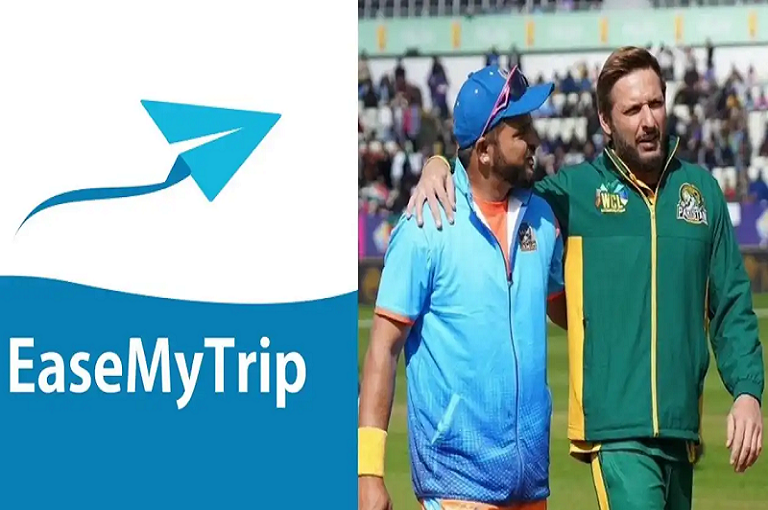
EaseMyTrip, a leading sponsor of WCL, announced on 30 July 2025 that it would no longer support the India–Pakistan match. The company’s co-founder, Nishant Pitti, stated on social media that this match is “not just a game” but a sensitive issue connected to national sentiments.
He wrote: “Terror and cricket cannot go hand in hand,” and emphasized that “Nation first, business later” is his core principle.
Emotional Impact of Terrorism
The background of this decision lies in the tragic Pahalgam terrorist attack on 22 April 2025, in which 26 civilians were killed. The attack was reportedly carried out by TRF (The Resistance Front), a Pakistan-based group affiliated with Lashkar-e-Taiba.
This incident reignited the debate on the relationship between public emotion and cricket–politics.
Player Boycott and Earlier Cancelled Group Match
The India–Pakistan match in the group stage of WCL had already been cancelled earlier as players like Shikhar Dhawan and Harbhajan Singh had refused to play in it.
Organizers Under Pressure and Match Cancellation
Following EaseMyTrip’s withdrawal of sponsorship, the WCL organizers issued an official apology and stated that cancelling the match was the better option since it was hurting national sentiments.
On social media, people shared messages like “WCL should be shut down”, reflecting how deeply India–Pakistan cricket is still tied to public emotions.
Response from EaseMyTrip
Pitti reiterated that EaseMyTrip had a five-year sponsorship deal with WCL, but their stance was always clear — they would not support events involving Pakistan.
His message was: “Some things are bigger than sport. Nation first, business later. Always. Jai Hind.”
Political and Economic Implications
This event raises the question: can political tensions be overlooked in the name of sports and business?
EaseMyTrip’s stand appears to be a business decision taken with national and cultural sentiments in mind, which may also strengthen its brand image.
Players’ Position
Many former Indian players such as Shikhar Dhawan and Harbhajan Singh have made it clear they will not play against Pakistan — a position that reflects national sentiment more than mere sporting choices.
Challenge for the Tournament
The credibility and financial structure of the WCL tournament is now under uncertainty. Cancelling the match affects not just a sports event but also casts a shadow over the reputation of the organizers.
Beyond immediate financial loss, the fallout raises strategic concerns: potential sponsors may now perceive WCL as a risky investment, wary of political sensitivity overshadowing sport. Organisers must also grapple with the erosion of stakeholder trust—players, sponsors, and fans may now question the tournament’s capacity to deliver high‑profile fixtures without controversy. This credibility gap could jeopardise future editions and partnerships, especially given the aborted semi-final was expected to be the event’s highlight. Moreover, media scrutiny and public backlash could deter broadcasters and advertisers, complicating efforts to rebuild confidence and financial viability as the tournament proceeds.
Questions About the Future
If such political tensions and potential terrorist threats continue, future bilateral cricket events may become even more difficult to organize.
In the coming days, it will be important to observe the stance of other companies and players on such matters — making it a subject of major debate.
Conclusion:
EaseMyTrip’s decision to withdraw its sponsorship from the India–Pakistan WCL semi-final is not merely a corporate move; it is a unique statement of patriotism, ethics, and the intersection of sports and business. The decision highlights that “national sentiment must prevail over cricketing culture”, igniting deep discussions among audiences, players, and organizers.
The significance of this decision extends beyond a brand’s identity; it reflects a powerful social and political message. It represents a clear stance where national emotions take precedence over commercial reputation. This decision has compelled other companies, organizers, and media entities to rethink their participation in events that risk overlooking public expectations and sentiments. Additionally, it raises an important question: how will political tensions affect future bilateral cricket matches — and will not just India, but the global sports community, reflect upon this?
About The Author