Biggest Sports Reform Since Independence: National Sports Governance and Anti-Doping Amendment Bill, 2025 Passed in Parliament
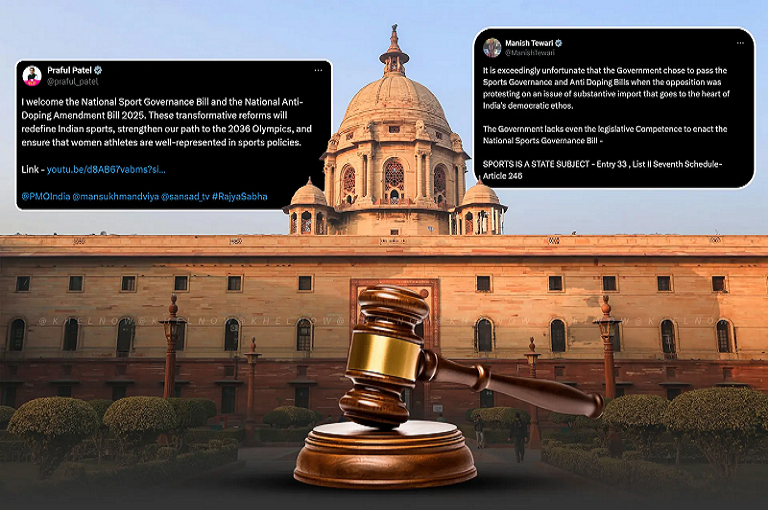
With the aim of bringing transparency and accountability to India’s sports administration and protecting the interests of athletes, the National Sports Governance Bill, 2025 and the National Anti-Doping (Amendment) Bill, 2025 were passed in the Rajya Sabha on Tuesday. A day earlier, both bills had been passed in the Lok Sabha. Union Sports Minister Mansukh Mandaviya described these bills as “the biggest sports reform since independence.”
National Sports Governance Bill: Towards Transparent and Accountable Sports Administration
A Long-Standing Effort Finally Achieved Since 1975
The initiative to introduce the National Sports Bill began in 1975, but due to political reasons, it never reached Parliament. In 2011, the National Sports Code was implemented, and later an attempt was made to convert it into a bill, but that too was stalled.
Now, as part of preparations to bid for the 2036 Olympics, and to bring India’s sports administration in line with international standards, the bill has finally been introduced and passed.
Key Provisions of the Bill
- Establishment of the National Sports Governance Body
- Creation of the National Sports Board
- Formation of the National Sports Election Panel to oversee the elections of sports organizations
- Establishment of the National Sports Tribunal to resolve disputes between players and federations
The Sports Minister stated that the bill will ensure accountability, justice, and better governance in sports federations.
Why the RTI Act Will Not Apply to BCCI
The bill clarifies that only sports organizations that receive government grants or assistance will come under the purview of the Right to Information Act (RTI).
- The Board of Control for Cricket in India (BCCI) does not receive government grants, and therefore it will remain outside the RTI’s scope.
- Several organizations have, from time to time, demanded that BCCI be brought under RTI, but the Sports Ministry has retained the current provision.
National Anti-Doping (Amendment) Bill: Ensuring a Fair Environment for Athletes
Background
To combat doping in India, the National Anti-Doping Act was enacted in 2022. However, the World Anti-Doping Agency (WADA) raised some objections to this law.
WADA’s main concern was that the National Board for Anti-Doping in Sports had the authority to monitor and direct the National Anti-Doping Agency (NADA), which was considered “government interference.”
If India failed to comply with WADA’s rules, it could have faced restrictions from participating in international competitions.
Major Changes Made in 2025
- The board (National Board for Anti-Doping) will continue to exist, but it will no longer have the authority to direct or control NADA.
- NADA will have full operational independence.
- Decisions related to doping will now be made solely by NADA’s experts and officials, not by any government or politically appointed individuals.
Benefits of the Changes
- India’s anti-doping system will now be fully compliant with WADA regulations.
- Athletes will receive fair investigation and hearings in doping cases.
- India’s reputation in international sports will remain intact, avoiding any bans or suspensions.
Sports Minister’s Displeasure at Opposition’s Absence
After the bills were passed, Union Sports Minister Mansukh Mandaviya said:
“This is the biggest sports reform since independence. This bill will ensure accountability, justice, and better governance in sports federations.”
He expressed regret that the opposition did not participate in passing such an important bill.
A New Chapter for India’s Sporting Future
The National Sports Governance Bill and the National Anti-Doping Amendment Bill are both structural reforms in India’s sports system.
- The first bill will ensure transparency and democratic processes in the functioning of sports federations.
- The second bill will create a fair and clean sporting environment for athletes.
These reforms will not only strengthen athletes’ trust but also enhance India’s performance and reputation in international sports.
About The Author