MIT’s Big Revelation: 95% of Generative AI Projects Have Failed! Is the AI Bubble About to Burst?
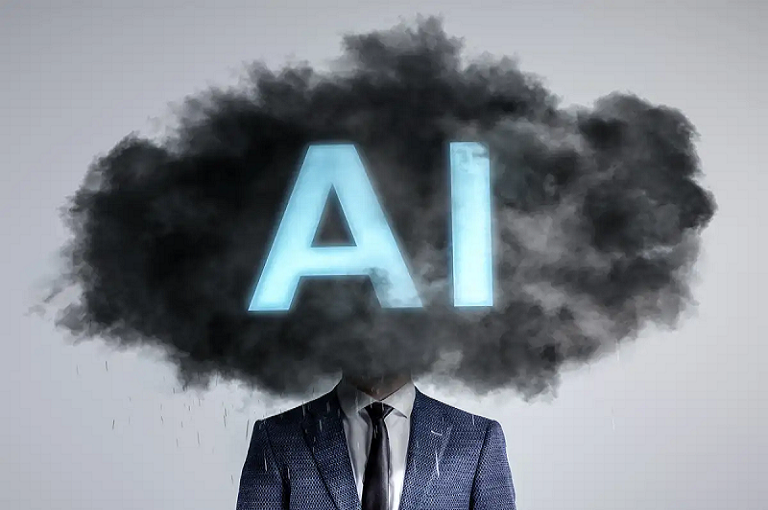
Massive Investment, Minimal Results: Only 5% Are Successful
In the past two years, Artificial Intelligence (AI)—especially Generative AI—has witnessed skyrocketing investment and hype. Companies worldwide believed that AI would multiply their productivity and slash costs. But the latest MIT report has shattered this illusion. According to the report, 95% of generative AI projects across the globe have failed, with only 5% of companies actually gaining tangible benefits from AI adoption.
Imaginary Expectations vs. Harsh Reality
Businesses assumed that chatbots, automated content creation, and data analysis tools would deliver miracles overnight. The reality, however, is quite different:
- Many projects never moved beyond the pilot stage.
- Where AI was deployed, its impact on revenue or productivity remained negligible.
- The return on investment (ROI) was far below expectations.
In short, the AI that was touted as the “magical solution of the future” is, for now, just part of a dream world.
Key Reasons: Why Is AI Integration Failing?
1. Unrealistic Expectations
Organizations built sky-high expectations around AI, assuming it could instantly solve complex problems. The limits of AI are now being exposed.
2. Poor Integration
Integrating AI tools into existing business systems and workflows isn’t easy. Most companies failed to execute this integration properly.
3. Lack of Expertise
AI adoption requires specialized skills and well-crafted strategies. Many companies lacked the right teams and technical know-how.
4. The “Learning Gap” Problem
Generative AI still struggles to continuously learn and adapt from user experiences. This lack of long-term intelligence has turned into one of its biggest weaknesses.
The Hidden Reality: Rise of “Shadow AI”
An interesting aspect of the report is the rise of “Shadow AI.” While official projects are failing, employees themselves are actively using tools like ChatGPT, Claude, or Copilot without formal approval.
- This phenomenon is called Shadow AI.
- It’s not part of official systems but is boosting personal productivity.
- This proves that AI isn’t completely useless—in fact, its practical and small-scale applications are more impactful.
Secrets of Success: The Companies That Are Winning
Some businesses have managed to use AI effectively and are seeing exceptional success. Their strategies include:
- Defining clear goals – focusing only on the most pressing business pain points.
- Fast transition from pilot to production – implementing AI in weeks, not months.
- Partnering with external experts – in-house builds often failed, while collaborating with AI companies and startups delivered strong results.
In short, AI success is going to those who adopt it strategically and thoughtfully, rather than chasing hype.
Is the AI Bubble About to Burst?
After this report, a big question is making rounds—is the AI bubble about to burst, like the dot-com boom of the early 2000s?
- Startups at risk: Companies whose entire business model depends solely on AI face serious challenges.
- Investor worries: Without visible returns, billions in investments could vanish.
- Tech industry under test: The coming years will reveal which companies truly adapt and which vanish after all the noise.
Experts, however, believe the bubble won’t completely burst. Instead, AI—like the internet—will mature slowly, with its real potential becoming evident over the next few years.

The Road Ahead: Opportunities and Risks
Despite the failures, AI is not going away. Instead, it’s pushing companies to learn and evolve:
- Focus on precise problems – not every issue requires AI.
- Balance between humans and machines – AI works best when paired with human expertise.
- Long-term investment – abandon the hope for instant miracles and aim for gradual, sustained improvement.
Conclusion
MIT’s report serves as a powerful warning: AI is not a magic wand.
- The failure of 95% of projects proves that much of the current buzz is overhyped.
- But these very failures will teach companies how to adopt AI more effectively.
- The businesses that move ahead with strategy, expertise, and patience will be the true winners in the AI race.
In other words, rather than a bubble bursting, AI’s real journey is just beginning.
About The Author