Drug Resistance Threat Deepens; National and Global Experts Convene at Amrita Hospital’s AMR NEXT 2025
Two-day conclave to convene global health leaders, policymakers, scientists, and innovators to shape India’s AMR response
Delhi NCR, November 29, 2025 — With antimicrobial resistance (AMR) rising at an alarming pace and threatening to erode decades of medical progress, top leaders from government, public health, academia, biotechnology, and international agencies will gather at Amrita Hospital, Faridabad for AMR NEXT 2025 – “Transformative Strategies to Tackle Antimicrobial Resistance: For a Safer Tomorrow.” The two-day conference on November 29–30 aims to accelerate India’s policy response, strengthen surveillance, and catalyse innovation across human, animal, and environmental health systems.
India continues to face some of the world’s highest burdens of bacterial infections. National AMR surveillance data show troubling resistance patterns in pathogens such as E. coli, Klebsiella pneumoniae, Staphylococcus aureus, and Acinetobacter baumannii.
While ICMR’s latest data indicate a modest improvement in E. coli susceptibility to ceftazidime (from 19.2% in 2023 to 27.5% in 2024), rising resistance to carbapenems and colistin remains a red flag, signalling diminishing treatment options.
Experts point to multiple drivers behind India’s AMR surge:
• High infectious disease load
• Excessive and inappropriate antibiotic use in human and animal health
• OTC availability of antibiotics
• Inadequate diagnostic stewardship
• Pharmaceutical waste and hospital effluents contaminating water systems
These trends are expected to impose enormous economic costs through prolonged hospital stays, increased treatment expenses, and productivity losses.
The conference will bring together senior policymakers, scientists, global AMR experts, and innovators to discuss solutions anchored in the One Health framework. Key sessions will spotlight:
• Breakthroughs in diagnostics and antimicrobial stewardship
• Innovation pipelines for new therapeutics
• Environmental and agricultural dimensions of AMR
• Strengthening laboratory networks
• Policy harmonisation and cross-border collaboration
An innovation showcase will feature emerging technologies in digital health, rapid diagnostics, antimicrobial optimization, and infection prevention strategies.
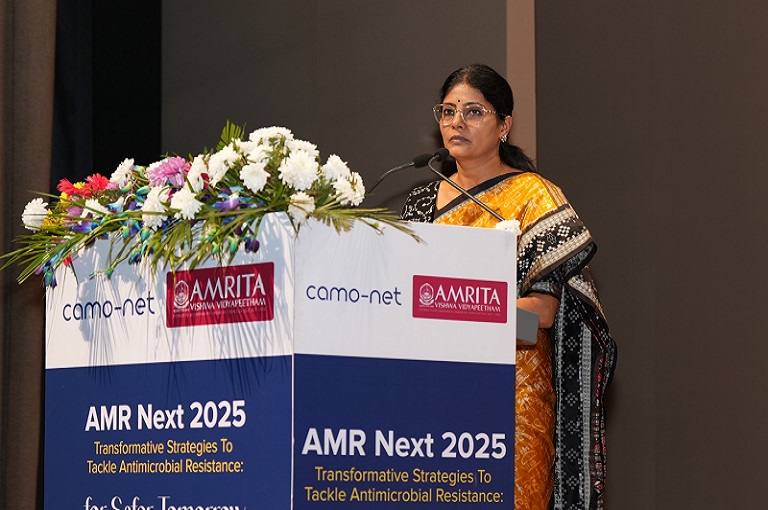
“India recognizes the need to address antimicrobial resistance and have instituted National Action Plan integrated with the principles of One health”, said Smt. Anupriya Patel, Union Minister of State for Health and family Welfare, Government of India. “We expanded laboratory capacity, standardized testing methods, and linked human, animal, and environmental surveillance platforms. This has allowed us to detect trends, respond rapidly, and contribute data to global surveillance systems with WHO.”
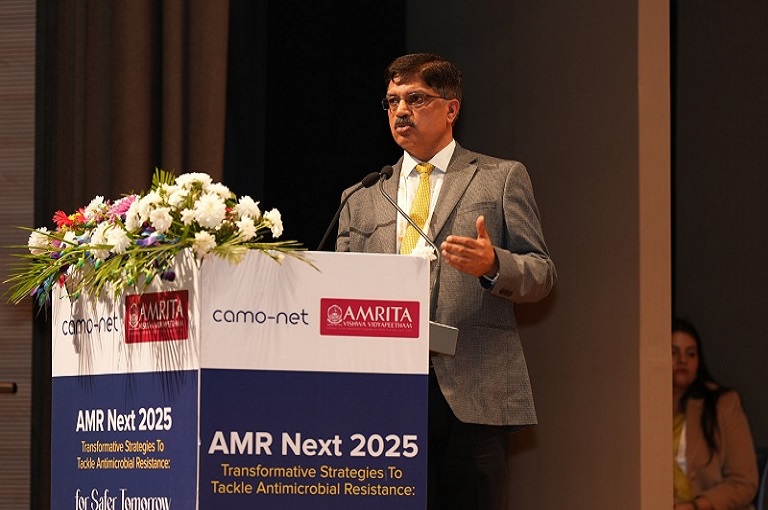
“Antimicrobial resistance continues to impose a significant and growing burden on health systems, increasing mortality, prolonging hospital stays, and driving up the cost of care.”, said Dr Sanjeev Singh, Medical Director, Amrita Hospital, Faridabad. “No single institution or country can address this challenge alone. What we urgently need is collaborative, cross-border research and coordinated action that integrates human, animal and environmental health”
“Antimicrobial resistance poses immense threat to all of us, no matter our borders or economic standing. A strengthened, coordinated international effort is urgently needed to advance the fight against AMR”, commented by Professor Alison Holmes OBE, Lead for the Centres for Antimicrobial Optimization Network and Director of Fleming Initiative, Imperial College London.
David Price, Evans Chair of Infectious Diseases and Global Health at the University of Liverpool said, “Collaboration is the recipe. We are happy to collaborate with Amrita Viswa Vidyapeetham to in advancing efforts to address antimicrobial resistance with a commitment towards innovative strategies to optimize antimicrobial use.”
About The Author