FIDE World Chess Championship 2026: First Game Ends in a Draw as Gukesh Holds Sindarov, Indian Champion to Play with White Pieces in Game 2
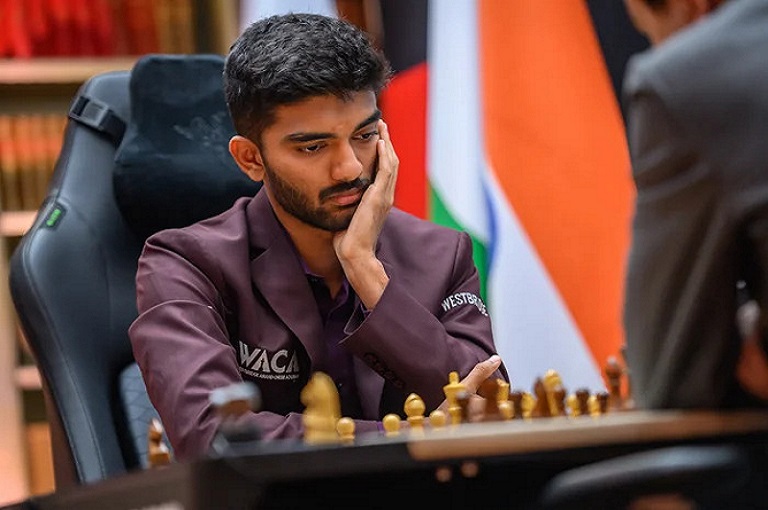
D Gukesh Shows Remarkable Composure Under Time Pressure Against Javokhir Sindarov in Geneva, Both Players Share Half a Point in Opening Game
The first game of the FIDE World Chess Championship 2026 ended in a thrilling draw as India’s defending world champion D Gukesh successfully held Uzbekistan’s challenger Javokhir Sindarov to a stalemate in Geneva, Switzerland. Playing with the black pieces, Gukesh demonstrated exceptional patience, tactical awareness and defensive skills to overcome early pressure and secure a crucial half point.
Despite facing difficulties during the opening phase and having limited time on the clock, the Indian grandmaster maintained his composure and played several accurate moves. Sindarov attempted to create winning opportunities but could not convert his early advantage into a decisive result.
With the first game ending in a draw, both players received 0.5 points each. Attention now shifts to the second game, where Gukesh will have the advantage of playing with the white pieces. Indian chess fans will be hoping that the defending champion uses this opportunity to take the lead in the prestigious championship.
Sindarov Takes Early Initiative but Gukesh Makes a Strong Comeback
The opening game witnessed an interesting battle between two highly talented grandmasters. Uzbekistan’s Javokhir Sindarov played with the white pieces and enjoyed the advantage of making the first move.
Sindarov used his opening advantage effectively and managed to establish a slightly better position during the initial stages. His pieces appeared more active, allowing him to put pressure on the Indian world champion.
For a while, it seemed that Sindarov could gain a significant advantage in the opening game. However, Gukesh refused to panic and continued playing with patience.
The Indian grandmaster carefully evaluated the position and made accurate defensive moves to prevent his opponent from creating a decisive threat. Gradually, he improved his position and brought the game back to equality.
Gukesh’s ability to remain calm under pressure once again highlighted his maturity and competitive temperament at the highest level of international chess.
Queens Come Off the Board as the Game Takes a Strategic Turn
One of the most important moments in the opening game came when both players exchanged their queens.
The queen is the most powerful piece in chess, and its removal often changes the character of a game. After the queens disappeared from the board, both grandmasters had to adjust their strategies and focus on piece coordination and positional advantages.
During this phase, Gukesh played several accurate moves to strengthen his position. He successfully neutralised Sindarov’s attacking possibilities and avoided unnecessary risks.
Sindarov also attempted to create complications by sacrificing a pawn. His objective was to disturb Gukesh’s defensive structure and generate fresh winning chances.
However, the Indian champion responded intelligently and did not allow the sacrifice to produce a meaningful advantage.
The position gradually became balanced, making it increasingly difficult for either player to force a victory.
Gukesh Handles Time Pressure with Exceptional Precision
One of the biggest talking points of the first game was Gukesh’s ability to manage time pressure.
In classical chess, time management is extremely important. A player may have a strategically strong position but can lose the advantage if there is insufficient time to calculate the best moves.
During the critical phase of the game, Gukesh had relatively little time remaining on his clock. Sindarov attempted to use this situation to increase the pressure on the defending champion.
However, Gukesh remained composed and continued finding accurate moves.
At one point, the Indian grandmaster appeared to have an opportunity to improve his position and possibly create winning chances. But Sindarov responded with precise moves and prevented Gukesh from gaining a decisive advantage.
The game eventually reached a position where neither player could realistically force a win.
Gukesh’s performance demonstrated that he possesses the patience, calculation skills and mental strength required to compete at the highest level.
Same Position Repeated Five Times Before the Game Ended in a Draw
The first game also attracted attention because of the way it concluded.
According to PTI, the same position appeared five times before the players agreed to a draw.
Under the rules of chess, a player can generally claim a draw when the same position occurs three times, provided the relevant conditions are satisfied. This is known as the threefold repetition rule.
The rule prevents players from continuing a game indefinitely when the same position keeps recurring without meaningful progress.
In the Gukesh versus Sindarov encounter, the position was repeated five times, indicating that neither player was able to create a decisive breakthrough.
Eventually, the opening game concluded in a draw, with both players receiving half a point.
Gukesh’s Opening Strategy Has Produced Four Consecutive Draws
Another interesting aspect of the opening game was Gukesh’s choice of opening strategy.
According to PTI, Gukesh has used this particular approach four times during his career, and all four encounters ended in draws.
Opening preparation plays a crucial role in modern professional chess. Grandmasters spend countless hours studying different variations, analysing opponents’ games and preparing specific strategies for important tournaments.
Some openings are designed to create aggressive attacking opportunities, while others focus on maintaining a solid position and limiting the opponent’s chances.
Gukesh’s approach in the first game reflected his preference for a reliable position with the black pieces.
Although Sindarov managed to put him under pressure initially, the Indian grandmaster eventually neutralised the threats and secured a draw.
It will be interesting to see whether Sindarov attempts to exploit this familiar opening strategy in the remaining games.
Game 2: Gukesh to Play with White Pieces
The second game of the FIDE World Chess Championship will be particularly important for D Gukesh.
After playing with the black pieces in the opening encounter, the Indian grandmaster will now play with white in Game 2.
Playing with white provides the advantage of making the first move. This allows a player to choose the opening variation and potentially dictate the direction of the game.
Gukesh could use this opportunity to adopt a more aggressive approach and put pressure on Sindarov from the beginning.
However, Sindarov is also a formidable opponent. His performance in the first game showed that he has the tactical ability and strategic preparation to challenge the defending champion.
The second game will therefore test both players’ opening preparation, calculation skills and ability to adapt to changing positions.
For Indian chess fans, the biggest expectation will be to see Gukesh convert his opportunity with the white pieces into his first victory of the championship.
14 Classical Games to Decide the World Chess Champion
The FIDE World Chess Championship features a total of 14 classical games.
The first player to reach 7.5 points will be declared the world champion.
The scoring system is straightforward. A victory earns one point, a draw gives both players half a point, and the losing player receives no points.
If both players finish the 14-game match with equal scores, the championship will be decided through tie-break games.
These tie-break encounters are played with shorter time controls, making them particularly challenging. Players must demonstrate quick calculation, accurate decision-making and the ability to perform under intense pressure.
The 14-game format ensures that the championship tests not just individual brilliance but also consistency, preparation and mental endurance over an extended period.
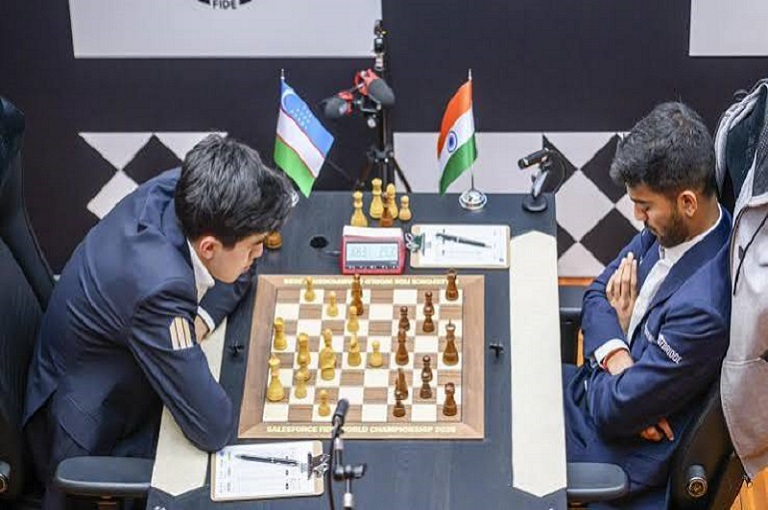
Time Control Rules: 120 Minutes for the First 40 Moves
Time management will remain one of the most important factors throughout the championship.
Each player receives 120 minutes for the first 40 moves.
From the 41st move onwards, players receive an additional 30 seconds for every move.
This time-control system requires players to balance deep calculation with efficient decision-making. Spending too much time on a single move can create serious difficulties later in the game.
Another important rule concerns early draw agreements.
Players cannot agree to a draw before completing 40 moves simply through mutual consent. However, a game can still end earlier under specific chess rules, including stalemate or qualifying repeated positions.
These regulations encourage competitive play and reduce the possibility of premature draws.
Rs 210 Crore Prize Fund: Every Game Victory Worth Around Rs 1.68 Crore
Apart from the prestigious world title, the championship also offers a massive financial reward.
The total prize fund for the FIDE World Chess Championship is 2.5 million US dollars, approximately Rs 21 crore.
According to the announced prize structure, a player receives 200,000 dollars, approximately Rs 1.68 crore, for every game victory.
The remaining prize money is distributed equally between the two competitors.
If the championship reaches a tie-break, the prize distribution changes.
The tie-break winner will receive 1.3 million dollars, approximately Rs 10.9 crore, while the runner-up will receive 1.2 million dollars, approximately Rs 10 crore.
The enormous prize pool further highlights the global importance and prestige of the championship.
Gukesh Faces a Major Challenge to Defend His World Title
For D Gukesh, the championship represents another major opportunity to establish himself among the greatest players in modern chess.
As the defending world champion, expectations are naturally high. Indian fans are hoping that he will successfully defend his title and continue India’s impressive rise in international chess.
However, Javokhir Sindarov is not an opponent who can be taken lightly.
The Uzbek challenger demonstrated his strength in the first game by creating early pressure and forcing Gukesh to defend carefully.
At the same time, Gukesh showed why he remains such a difficult opponent to defeat. His defensive precision and composure under time pressure were among the biggest positives from the opening encounter.
The remaining games will require both players to maintain consistency and make the most of every opportunity.
Opening preparation, positional understanding, tactical accuracy and time management could ultimately determine the winner.
Can Gukesh Secure His First Victory in Game 2?
The opening draw has ensured that neither player has gained an early advantage in the championship.
Both grandmasters now have half a point, and the contest remains completely open.
Game 2 will provide Gukesh with an opportunity to take the initiative with the white pieces. The Indian champion will look to use his first-move advantage to create pressure and challenge Sindarov’s defensive preparation.
Sindarov, meanwhile, will be determined to continue his strong performance and prevent Gukesh from taking the lead.
The first game may have ended without a winner, but it has certainly increased excitement surrounding the championship.
With 14 classical games scheduled, the road to the world title is still long. Every move, every strategic decision and every small mistake could prove crucial.
The biggest question now is whether D Gukesh can turn his opportunity with the white pieces into a memorable victory in Game 2 and take the first major step towards defending his world championship crown.
About The Author