Pearl Academy and British Council Bring Indian and UK Higher Education Together to Bridge Creative Futures
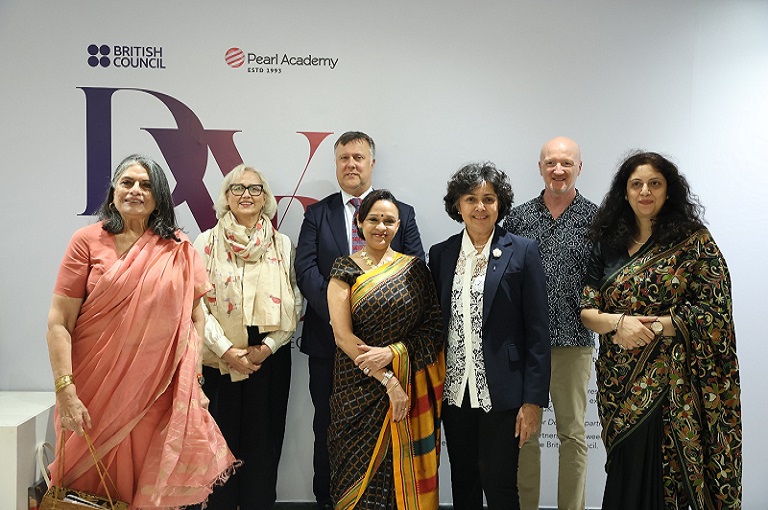
A year-long academic partnership brought Indian and British design students into the same studio, without either side ever crossing borders
New Delhi, 10th September 2026: Pearl Academy, in partnership with the British Council, is bringing Indian and UK higher education together through design education, creating a platform for cross-border collaboration, cultural exchange and knowledge sharing. Over the past year, students from Pearl Academy, four UK higher education institutions and an independent British contemporary artist have worked together across time zones, developing design projects without ever sharing a physical space.
The collaboration now comes together publicly through Design Without Borders: Creative Futures Collective at the British Council in New Delhi, showcasing the outcomes of this year-long academic exchange. The opening reception was attended by distinguished guests including Ben Mellor, British Deputy High Commissioner, alongside leading voices from academia, design and sustainability. The programme featured a panel discussion, “Creativity is the New Currency of the 21st Century,” with Rachelle V. Knowles, Head of International at Manchester School of Art, Manchester Metropolitan University, UK; Sunita Kohli, President and Co-founder, K2 India; Payal Jain, Indian couturier and sustainability advocate; Shannon West, Deputy Director India and Director North India, British Council; and Aditi Srivastava, President, Pearl Academy.
The partnership brought Pearl Academy together with Manchester Metropolitan University, Nottingham Trent University, London College of Contemporary Arts, and Birmingham City University. The collaboration used Collaborative Online International Learning (COIL), an approach that enables students in different countries to work together on academic projects through digital platforms. The exhibition also features a parallel collaboration between fashion design students of Pearl Academy and contemporary British artist Alexander Gorlizki, who worked directly with students to reinterpret traditional Indian block and screen printing techniques.
Across the projects, Indian craft traditions met contemporary design and technology, as students from India and the UK reimagined materials, techniques and ideas across cultures. With the London College of Contemporary Arts, students collaborated on a khadi collection inspired by the idea of Satyagraha. With Birmingham City University, discarded cricket material (including gloves, pads, uniforms, etc.) was transformed into two garments finished with Kantha embroidery, exploring women’s place in the sport. With Nottingham Trent University, students turned a broken clamp into a functional lamp and reclaimed mesh into a necklace, both finished with 3D printing, as well as exploring textiles under the coveted Rebel Tartan Project. With Manchester Metropolitan University, students worked on AI-assisted fashion, a satirical take on greenwashing, and a garment built around public transport safety. Pearl Academy’s Interior Design students designed the exhibition space, centered around a textile installation in the British Council’s foyer.
The collaboration reflects a shift in design education towards more international and interdisciplinary models of learning, allowing students to work continuously with peers in other countries while bringing different cultural and academic perspectives into the creative process. Rather than relying solely on physical mobility or study abroad programmes, the model enables students to experience international collaboration as part of their everyday academic learning.
The British Council is a key collaborator in bringing the outcomes of this year-long India–UK academic exchange to a wider audience, providing a platform for the outcomes of the India–UK academic exchange to be presented to a wider audience and creating opportunities for dialogue around international education, culture and creative practice. The exhibition, Design Without Borders: Creative Futures Collective, is on display at the British Council’s premises on 17, KG Marg, New Delhi. Running until 31st October, the exhibition will be accompanied by panel discussions, masterclasses and workshops for school and college students, bringing together industry professionals, educators, government representatives, diplomats and other members of the creative community.
Commenting on the partnership, Aditi Srivastava, President, Pearl Academy, said: “Centuries of shared history between India and the UK have shaped the creative landscapes of both nations. This collaboration gives our students the opportunity to contribute to that evolving story, working across cultures and time zones to co-create in a truly global classroom. It demonstrates how international collaboration can become an integral part of design education, opening new ways for students to learn, create and see the world through different perspectives”
Alison Barrett MBE, Country Director India, British Council added, “Creative partnerships like this one between the British Council and Pearl Academy demonstrate the depth and impact of India-UK international collaborations in design education. Connecting students across borders through innovative models can enable creative exchange and intercultural learning as well as be the catalyst for future engagements. We are pleased to showcase the creative outputs of these collaborations at the British Council and hope it will inspire more institutional creative partnerships between our countries.”
The collaboration reflects a shared commitment to creative education that enables students to learn, create and collaborate across cultures, disciplines and geographies.
About The Author