Commonwealth Games History: India’s Golden Journey from a Colonial Nation to a Global Sporting Power
Introduction
The Commonwealth Games are much more than an international sporting event. They represent a unique blend of history, culture, politics, and athletic excellence. Today, the Games rank among the world’s biggest multi-sport competitions, but their origins date back to a time when much of the world was under British rule.
India’s Commonwealth Games journey is particularly inspiring. It began when the country was still under British colonial rule and competed with just six athletes. Over the decades, India transformed into one of the strongest sporting nations in the Commonwealth, achieving its greatest success during the 2010 Delhi Commonwealth Games. The defining moment came on October 14, 2010, when badminton star Saina Nehwal won a dramatic gold medal that lifted India to second place in the overall medal standings for the first time in history.
This remarkable journey is filled with unforgettable milestones, legendary athletes, and historic achievements that shaped India’s sporting legacy.
The Origin of the Commonwealth Games
The story of the Commonwealth Games began in 1891 during the height of the British Empire. At the time, Britain ruled nearly one-quarter of the world’s population and controlled vast territories across continents.
A British clergyman named John Astley Cooper proposed an ambitious idea. He believed the strength of the British Empire depended not only on military power but also on unity among its people. He suggested organizing an international sporting competition involving athletes from across the Empire to strengthen friendship, loyalty, and cooperation.
He called the concept the Pan-Britannic Festival.
Although the idea received attention, turning it into reality proved difficult. For nearly two decades, it remained only a proposal without practical implementation.
The Festival of Empire Became the First Step
A major breakthrough came in 1911 during the coronation celebrations of King George V.
To mark the occasion, Britain organized the Festival of Empire in London. Athletes from Australia, Canada, New Zealand, and South Africa competed together in several sporting events.
Although this was not officially recognized as the first Commonwealth Games, historians consider it the event that demonstrated the potential of an Empire-wide sporting competition.
It showed that athletes from different parts of the British Empire could successfully compete on a common platform.
The 1928 Olympic Meeting That Changed History
During the 1928 Amsterdam Olympic Games, sports administrators from across the British Empire met to discuss the future of international competition.
The meeting resulted in a historic decision.
They agreed that every four years, separate from the Olympic Games, countries within the British Empire would organize their own international multi-sport event.
This decision officially paved the way for what would become the Commonwealth Games.
The First Commonwealth Games Nearly Failed
The inaugural British Empire Games were scheduled to begin on August 16, 1930, in Hamilton, Canada.
However, serious financial problems threatened the event before it even started.
Commercial air travel was almost nonexistent at the time, meaning athletes had to travel by expensive and lengthy sea voyages. Several countries announced they could not afford to send their teams.
To save the competition, Canadian organizers provided financial assistance to several participating nations.
Without this support, the first edition might have been canceled, and the Commonwealth Games could have ended before they truly began.
A Humble Beginning
The first edition featured only 11 nations and approximately 400 athletes.
The Games included just six sports.
Athletics
Boxing
Swimming
Diving
Wrestling
Lawn Bowls
Today, the Commonwealth Games involve thousands of athletes competing across numerous sports.
Australia’s Bobby Pearce won the first-ever gold medal in Commonwealth Games history. He later became an Olympic champion as well.
India’s First Commonwealth Appearance Under British Rule
India made its Commonwealth Games debut in 1934.
However, India was still a British colony and not an independent nation.
The Indian contingent consisted of only six athletes.
Despite limited resources and colonial rule, wrestler Rashid Anwar created history by winning a bronze medal.
This became India’s first Commonwealth Games medal.
The achievement remains remarkable because India had not yet gained independence and did not compete under its own national flag.
World War II Interrupted the Games
The Commonwealth Games were also affected by one of history’s greatest global conflicts.
The editions scheduled for 1942 and 1946 were canceled because of World War II.
As millions of lives were lost across the world, international sporting events became impossible.
The Games returned only in 1950 when Auckland, New Zealand hosted the event.
These remain the only two Commonwealth Games editions canceled because of war.
From British Empire Games to Commonwealth Games
As countries gained independence after World War II, the British Empire gradually dissolved.
Nations including India, Pakistan, Sri Lanka, Ghana, Nigeria, and Malaysia became independent members of the Commonwealth.
Reflecting these political changes, the Games underwent several name changes.
British Empire Games
British Empire and Commonwealth Games
British Commonwealth Games
Commonwealth Games
The modern title represents equality among independent member nations rather than colonial relationships.
Milkha Singh Won India’s First Gold Medal
India waited 24 years for its first Commonwealth Games gold medal.
The breakthrough came in 1958 at Cardiff, Wales.
Milkha Singh delivered one of the greatest performances in Indian sporting history by winning the 440-yard race in 46.71 seconds.
He became the first Indian athlete to win a Commonwealth Games athletics gold medal.
Following this incredible achievement, he earned the legendary nickname “The Flying Sikh.”
During the same Games, wrestler Leela Ram also won a gold medal, making the tournament even more memorable for India.
India Hosted the Commonwealth Games for the First Time
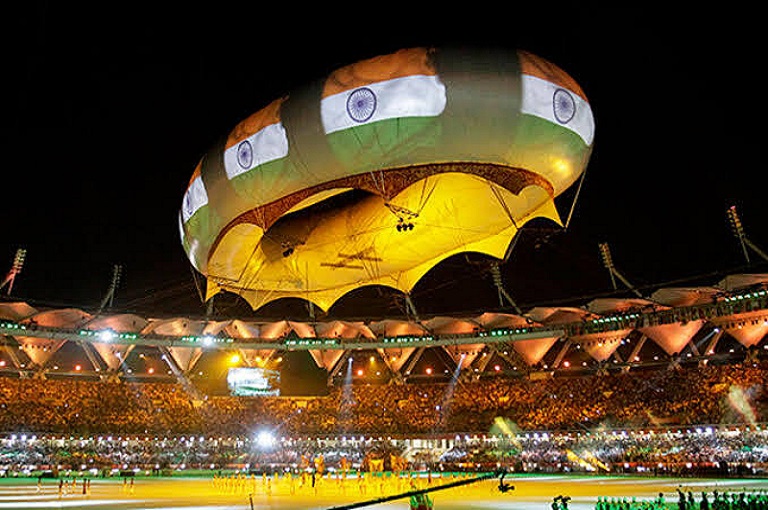
India achieved another historic milestone in 2010 by hosting the Commonwealth Games in New Delhi.
It became the first South Asian city to organize the prestigious event.
Around 6,000 athletes from 71 Commonwealth nations and territories participated in 272 medal events across 17 sports.
Hosting such a massive international competition was both an honor and a tremendous responsibility.
The world closely watched India’s preparations and execution.
Saina Nehwal’s Historic Victory That Changed Everything
October 14, 2010 remains one of the greatest days in Indian sporting history.
Badminton star Saina Nehwal entered the women’s singles final carrying enormous expectations.
The match was about far more than an individual gold medal.
India’s position in the overall medal standings depended on her victory.
If she lost, India would fall to third place.
Saina handled the pressure brilliantly and won the gold medal.
Her victory gave India its 38th gold medal and increased the country’s total medal tally to 101.
For the first time ever, India finished second in the Commonwealth Games medal table, behind only Australia.
Even today, it remains India’s greatest performance in Commonwealth Games history.
India’s Historic Performance at the 2010 Commonwealth Games
The 2010 Delhi Commonwealth Games became India’s finest sporting achievement in the competition.
India won a total of 101 medals.
38 Gold
27 Silver
36 Bronze
This outstanding performance established India as one of the strongest sporting nations in the Commonwealth.
The success also boosted confidence among Indian athletes ahead of future Olympic Games and other international championships.
Legendary Indian Athletes Who Shaped Commonwealth Games History
Many Indian athletes have left an unforgettable mark on the Commonwealth Games.
Milkha Singh revolutionized Indian athletics with his historic gold medal.
Saina Nehwal delivered one of the most significant victories in Indian sporting history.
Abhinav Bindra showcased excellence in shooting.
Sushil Kumar dominated wrestling.
Geeta Phogat inspired a new generation of female wrestlers.
Yogeshwar Dutt became one of India’s greatest wrestling champions.
Mirabai Chanu established herself as one of the world’s finest weightlifters.
PV Sindhu continued India’s badminton legacy.
Lovlina Borgohain strengthened India’s boxing reputation on the international stage.
Together, these athletes transformed India’s image from an emerging sporting nation into a global powerhouse.
India’s Expectations at the 2026 Commonwealth Games
The 2026 Commonwealth Games will be held in Glasgow, Scotland.
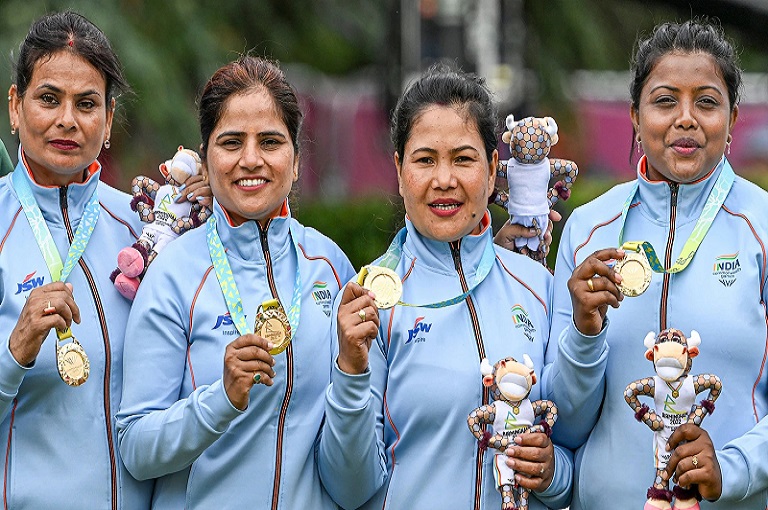
India has sent a contingent of around 125 athletes competing in athletics, boxing, weightlifting, judo, swimming, track cycling, gymnastics, lawn bowls, 3×3 basketball, and para sports.
Indian fans expect another strong performance as the country continues to build on its rich Commonwealth Games legacy.
Looking Ahead to the 2030 Commonwealth Games
The year 2030 will mark the 100th anniversary of the Commonwealth Games.
India is expected to host the Games in Ahmedabad, making it the country’s second time hosting the event after New Delhi 2010.
The centenary edition has the potential to become one of the biggest sporting celebrations in Commonwealth history while showcasing India’s world-class sporting infrastructure and growing global influence.
Conclusion
The history of the Commonwealth Games is not merely the story of a sporting competition. It reflects political transformation, global change, determination, and human achievement.
India’s journey from competing as a British colony in 1934 to becoming one of the Commonwealth’s leading sporting nations is truly extraordinary.
From Rashid Anwar’s historic first medal to Milkha Singh’s unforgettable gold, from Saina Nehwal’s pressure-filled victory in 2010 to India’s record-breaking haul of 101 medals, every chapter has strengthened the nation’s sporting identity.
Today, Indian athletes proudly compete among the world’s best, carrying forward a legacy built through decades of perseverance and excellence. As the Commonwealth Games continue to evolve, India stands ready to write even more golden chapters in its remarkable sporting history.
About The Author