Operation Mahadev: How a Chinese satellite phone exposed the cunningness of terrorists
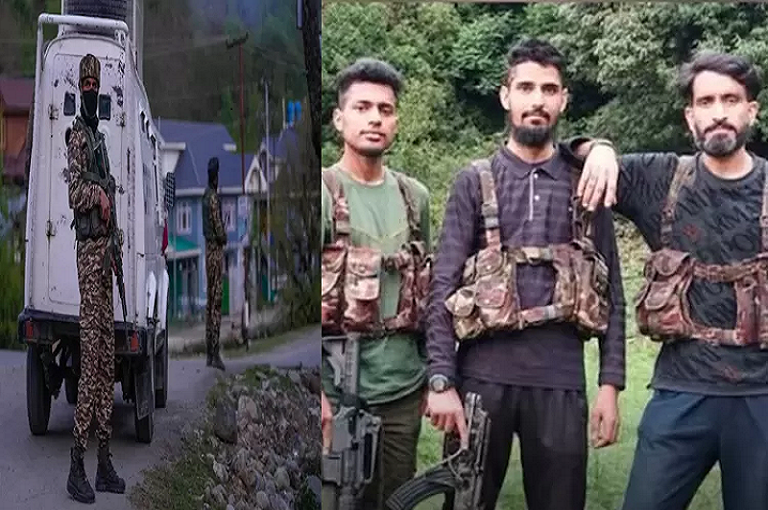
New Delhi (Technology Desk) — Deep in the forests on the outskirts of Srinagar, near Dachigam National Park, three foreign terrorists linked to Lashkar-e-Taiba—Suleiman (also known as Hashim Musa or Asif), Yasir, and Abu Hamza—were found hiding. Suleiman is alleged to be the mastermind behind the April 22 2025 Pahalgam terror attack that killed 26 civilians, mostly tourists. Operation Mahadev successfully neutralized this threat.
Intelligence Breakthrough: Satellite Phone Activation
On July 11, a Chinese satellite phone belonging to the terrorists was intercepted in the Baisaran area. The device—identified as a Huawei-branded Ultra Set—was not hidden under traditional networks but operated via encrypted radio communication. Its activation triggered red flags, enabling signal-intelligence units based in Delhi to trace it to the Lidwas region near Dachigam.
Ultra Set: The Encrypted Communication Trap
The Ultra Set is a high-security communication tool crafted by Chinese companies for use by Pakistan’s army, bypassing GSM or CDMA and instead transmitting messages via radio waves connected to a remote control station across the border. Each device pairs only with its control station—not directly with another device—offering so-called anonymity. Ironically, the security model itself became the terrorists’ undoing.
14 Days of Covert Surveillance
Security agencies monitored the device over approximately two weeks. On the night it activated—around 2 AM—forces detected its signal and located it via triangulation. A drone then confirmed human presence in the target area. Early morning, at 9:30 AM, Indian Army, CRPF, and J&K Police launched the operation.
Swift Strike: Operation Timeline
- 2:00 AM – Satellite device pinged location authorities.
- 8:00 AM – Drone surveillance verified presence.
- 9:30 AM – Ground forces surrounded the hideout near the Mahadev Peak foothills.
- 11:00 AM – Two terrorists were immediately eliminated.
- 11:45 AM – Third terrorist tried to flee but was neutralized.
- 12:45 PM – Area secured, bodies identified, arms recovered.
The entire mission concluded in just about three hours—a decisive and efficient surgical strike.
Recovered Weapons & Technology Evidence
Troops recovered AK-47s, M4 carbine rifles, rifle grenades, and satellite-navigation gear linked to China’s Beidou system. Terrorists reportedly chose Beidou-based devices to avoid GPS tracing—demonstrating that even counter-surveillance methods can leave technical footprints.
When Cunning Becomes a Trap
Encryption and frequency-hopping radio tech in the Ultra Set are designed to evade interception. However, even a brief activation—a time-stamped positional signal—was enough to expose their whereabouts. Experts noted: intercepting encrypted traffic might take days, but the broadcast itself was their undoing.
Cultural Symbolism of the Codename
The name “Mahadev” refers to Mahadev Peak, the highest summit (approximately 3,962 m / 13,011 ft) of the Zabarwan Range, visible from across Srinagar. It is revered by Kashmiri Pandits as the abode of Lord Shiva, and historically served as the focal point of annual pilgrimages, especially on Sawan Purnima, until militancy curtailed the tradition .
Cultural & Historical Resonance
Mahadev Peak is mentioned in ancient texts like the Nilamata Purana and Kalhana’s Rajatarangini, which record its sanctity as a Hindu pilgrimage site where devotees once trekked after performing purification rites in nearby streams . Multiple folklore narratives suggest that Lord Shiva traversed this ridge en route to Amarnath, imparting the Amar Katha to Parvati along the way, embedding the site deeply in religious memory and spiritual geography .
Symbolic Weight of the Operation Codename
By choosing “Operation Mahadev” as the codename, security forces invoked not just a strategic vantage point but also a spiritual emblem—a symbolic redemption at a place of cultural trauma. The encounter occurring just weeks before Sawan Purnima amplified the resonance: a strike against terror at the foothills of a mountain once traversed by Shiva himself. This added a layer of moral symbolism, turning the site of violence into a message of cultural resilience and divine justice
Conclusion: Technology as Both Shield and Snare
Operation Mahadev underscores a paradox: tools adopted as covert communication channels can become betrayals when interceptable. In this case, Chinese Ultra Set satellite phones—thought to provide anonymity—ultimately led security forces straight to the terrorists. Technology that gives the illusion of secrecy may, in fact, illuminate the path to justice.
Summary Table
| Element | Detail |
|---|---|
| Target | Suleiman (Hashim Musa/Asif), Yasir, Abu Hamza |
| Trigger | Activation of an encrypted Chinese satellite phone |
| Surveillance Duration | ~14 days |
| Operation Duration | ~3 hours (2:00 AM – 12:45 PM) |
| Weapon Recovery | AK-47s, M4 carbine, grenades, sat-nav equipment |
| Key Lesson | Highly-encoded devices can betray users via activation signaling |
About The Author