Tesla Model Y Faces Slow Response in India: Only 600 Bookings! Is Pricing the Biggest Barrier?
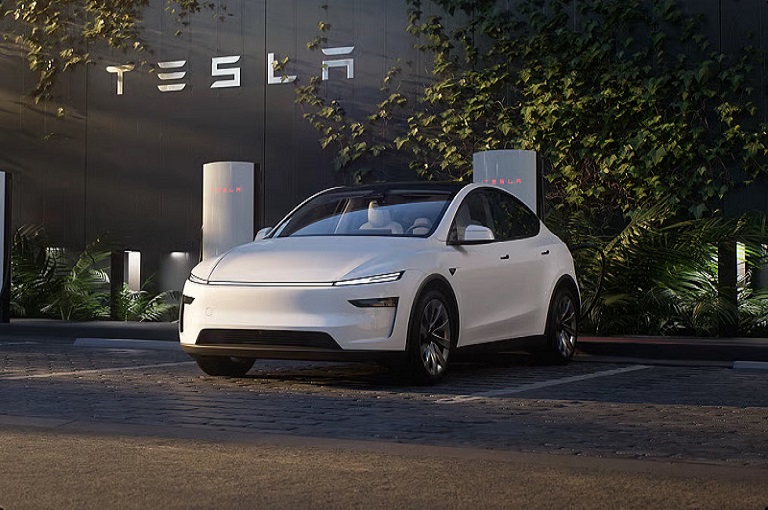
Tesla, the global leader in electric vehicles, is admired worldwide for its innovation, futuristic technology, and Elon Musk’s bold vision. Yet, its much-awaited entry into India has not met expectations.
According to a recent Bloomberg report, the Tesla Model Y has received only around 600 bookings in India so far. This number is far below Tesla’s target of 2,500 units annually, a benchmark the company expected to achieve quickly after launch.
So, why is the Model Y—one of Tesla’s most popular cars globally—facing such a slow response in India? Let’s dive deep.
Tesla Model Y Price and Variants in India
Tesla launched the Model Y in India in two premium variants:
- Long Range RWD Variant – starting at ₹59.89 lakh (ex-showroom)
- Long Range AWD Variant – starting at ₹67.89 lakh (ex-showroom)
In the U.S., the same car is priced at the equivalent of ₹38 lakh. That means Indian customers are paying nearly double the price, largely due to import duties and heavy taxation.
Why the High Price Is the Biggest Roadblock
India is the world’s third-largest automobile market, but consumer behavior here is very different from Western nations.
- Indian buyers prioritize affordability, fuel efficiency, and value-for-money.
- At the ₹60–70 lakh price point, most customers prefer established luxury brands like Mercedes-Benz, BMW, or Audi.
- This makes the Tesla Model Y an ultra-niche offering that appeals only to a very small segment of buyers.
Limited Availability Hurts Market Penetration
Tesla has made an extremely restricted entry into India:
- Only two showrooms have been opened so far—one in Mumbai and one in Delhi.
- Deliveries are initially limited to just Mumbai, Pune, Delhi, and Gurugram.
As a result, potential buyers across the rest of the country can’t even experience the product first-hand.
Tesla’s Global Challenges Beyond India
Interestingly, Tesla is not facing resistance only in India. Reports suggest slower-than-expected demand in Europe as well.
Key reasons include:
- Rising competition from brands like BYD, Hyundai, Kia, and Volkswagen.
- Higher production costs due to expensive batteries and semiconductor shortages.
- Policy headwinds in several countries that make imports costlier.
This global slowdown is casting doubts on Tesla’s ambitious growth strategy.
Hopes from India-U.S. Trade Deal Dwindling
Tesla initially hoped that the India-U.S. trade deal would bring tariff relaxations, making its cars more affordable in India.
However, recent moves by U.S. President Donald Trump to increase duties have dashed those hopes for now.
That said, Tesla still sees opportunity in a Europe-India free trade agreement. If finalized, it could allow Tesla to ship cars from its German Gigafactory, potentially reducing prices.
Tesla Model Y Features and Strengths
Despite the pricing challenge, the Tesla Model Y remains a technological powerhouse with standout features:
- Long Range Battery – Over 500 km range on a single charge.
- Autopilot Mode – Advanced driver-assistance system.
- Minimalist Premium Interior – Large central touchscreen, futuristic layout.
- Supercharging Support – Rapid charging within minutes.
- AWD Capability – Enhanced control and traction on all terrains.
These features make it one of the most advanced EVs in its segment worldwide.
India’s EV Market Reality
The Indian EV market is growing rapidly, but its sweet spot lies between ₹10–25 lakh.
- Cars like Tata Nexon EV, MG ZS EV, Mahindra XUV400, and Hyundai Kona are attracting strong demand.
- These vehicles balance affordability with performance, catering to middle-class and upper-middle-class buyers.
At ₹60+ lakh, the Tesla Model Y sits far above mainstream EV demand, limiting its potential.
Could Tesla Bring a More Affordable Model Y?
Industry insiders suggest Tesla might revise its India strategy in the coming months. Possible moves include:
- Launching a more affordable Model Y variant.
- Setting up local manufacturing or assembly units in India.
- Lobbying for tax relaxations and incentives from the government.
Such steps could significantly boost Tesla’s sales and visibility in India.
Tesla’s Key Challenges in India
To succeed in the Indian market, Tesla must tackle multiple hurdles:
- High import duties – Doubling the retail price.
- Charging infrastructure gap – EV stations still limited outside metros.
- Strong competition – Local and Chinese brands offering cheaper EVs.
- Customer mindset – Indian buyers are cautious with premium EVs.
The Road Ahead for Tesla in India
While initial response has been weak, Tesla has not given up on India.
- Local production could reduce prices by 20–25%.
- A growing EV ecosystem and government incentives may support its expansion.
- Entry into the mass-market EV segment could unlock huge potential.
If Tesla adapts its strategy, the brand could become a serious force in India’s auto industry.
Conclusion: Tesla Needs More Than Its Brand Name in India
The Model Y’s mere 600 bookings underline a simple truth: In India, brand power alone cannot drive sales.
Indian consumers demand value, practicality, and affordability—even in luxury segments.
For Tesla to win here, it must:
- Build local manufacturing.
- Launch cost-effective models.
- Aggressively expand charging infrastructure.
Only then can Tesla truly challenge the likes of Tata, Mahindra, Hyundai, and BYD in the Indian EV race.
About The Author